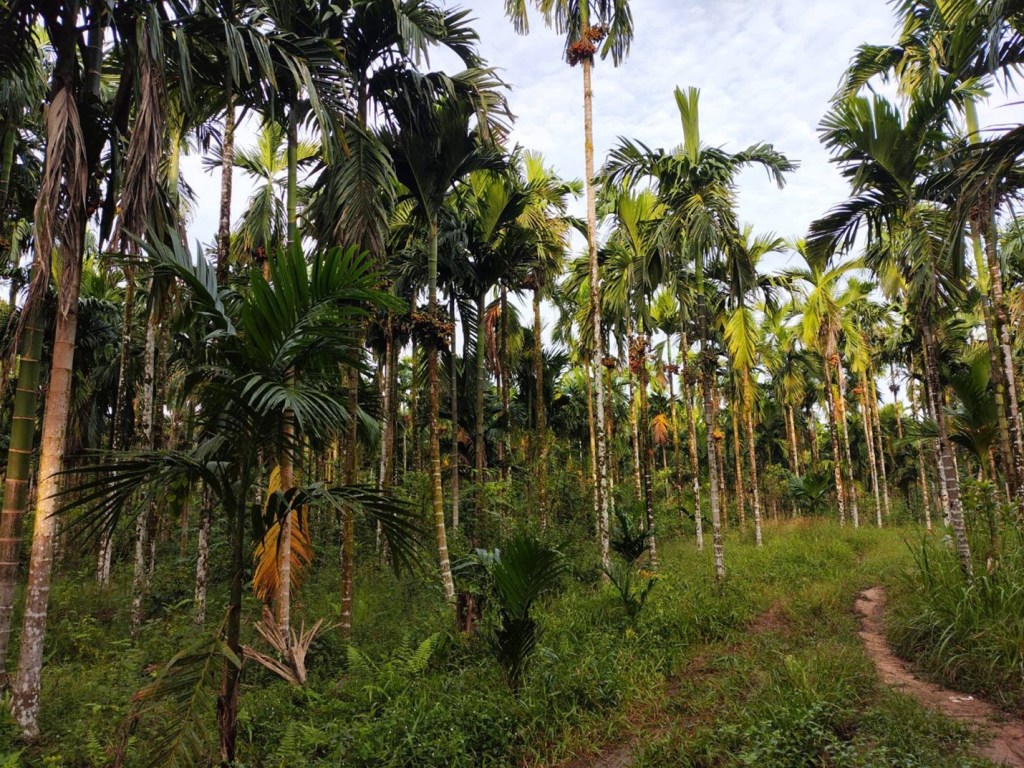
Image by Htut Myat Oo (Southern Youth).
By Khin Htet Htet Pyone, Ramiro Daniel Crego, Saw San Ngwe, Saw Di Win, Katherine LaJeunesse Connette, Melissa Songer, and Grant M. Connette.
During recent decades, farmers in tropical areas have transformed their land use and farming practices. Instead of using traditional methods to grow food for their own families, they are now using new farming practices to grow crops mainly for profit. This shift is particularly prominent in southern Myanmar’s Tanintharyi Region, where decades of conflict have impacted both the environment and the lives of the local Karen communities. While previous research has studied how big farming businesses have changed their practices over time in Tanintharyi, we still have much to learn about why and how the local Karen people are changing their small-scale farming practices.
Our study focused on four villages in Bokpyin Township of Tanintharyi Region to understand the changes in the local farming system over the years. We interviewed local farmers to learn more about how and why their agricultural practices have changed. We then used satellite images to look at the actual changes in the vegetation and development of that land from 1976 to 2020.
Before the 1980s civil war, farmers used a traditional ‘slash-and-burn’ method, which involves cutting and burning to clear the forest for short-term agriculture. This method was used to meet the basic needs of the community, and it had the benefit of allowing the land to naturally recover during fallow periods. This has now changed so that permanent tree plantations, especially plantations of the non-edible betel nut tree, have taken over as the primary source of income for households. This shift is fueled by the desire for more income security, the risk of losing land that is left fallow, and new land use policies after the 2012 ceasefire agreement.
While betel nut cultivation has been crucial for resettlement and livelihood development, including providing modern education for children, this shift is causing a loss of forest areas as well as traditional farming practices. Improved planning could better incorporate the long-term needs of a healthy ecosystems with the social-economic needs of the community. Our study contributes to the global understanding of changes in farming systems, using interviews and satellite imagery analysis as a model for future studies in different landscapes. This knowledge can help shape better policies for land use and environmental protection.
 Relational Thinking