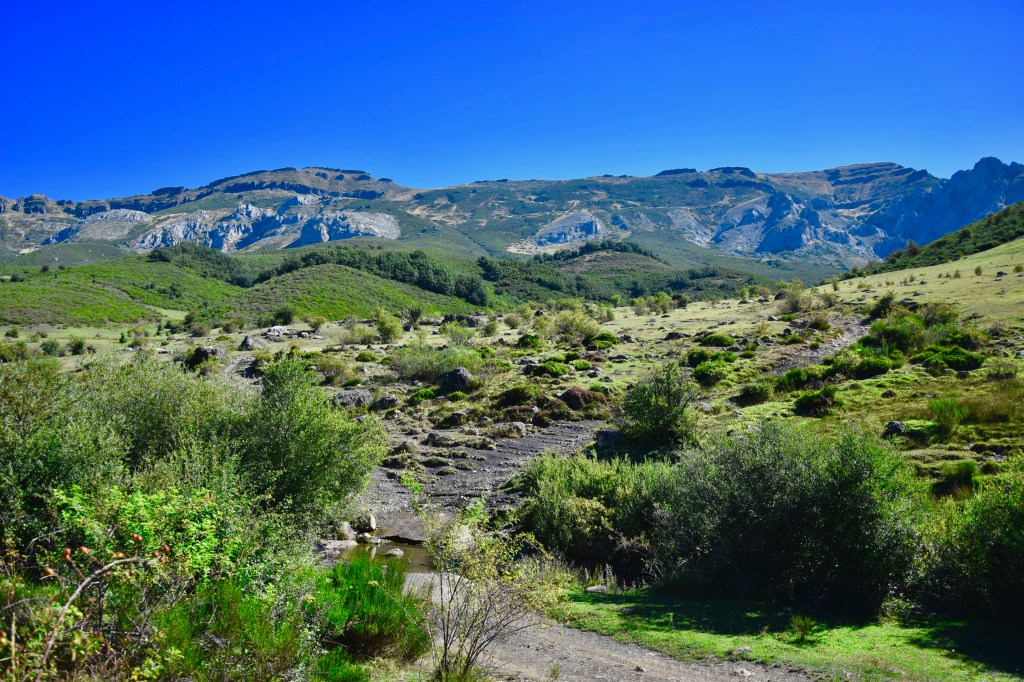
(Credits: Francisco Lloret)
By Francisco Lloret, Adrián Escudero, Joan Lloret, and Fernando Valladares.
In high-income countries, there is increasing social and political debate about population loss in rural areas. In addition to social and economic consequences, land abandonment due to rural depopulation has environmental repercussions. So far, current patterns of biodiversity and ecosystem services in these territories reflect their ecological history. However, analyses of actions aiming to reverse depopulation have neglected ecological knowledge.
We present a procedure to describe how depopulating territories might evolve. We consider both future trends of depopulation and environmental services, such as biodiversity, carbon storage, pollution control, water resources and soil conservation.
We applied this procedure to the case of Spain, considering various alternatives: (1) non-intervention, (2) maintenance of the historical landscape, (3) active conservation, (4) extensive, sustainable land use, (5) intensified land use.
We conclude that extensive, sustainable land use better optimizes demographic consolidation, minimizes environmental impact, promotes the resilience of the services provided by the ecosystems and facilitates the implementation of actions to refrain depopulation. We highlight the need to incorporate ecological knowledge in the assessment and application of actions aiming to withhold rural depopulation.
 Relational Thinking