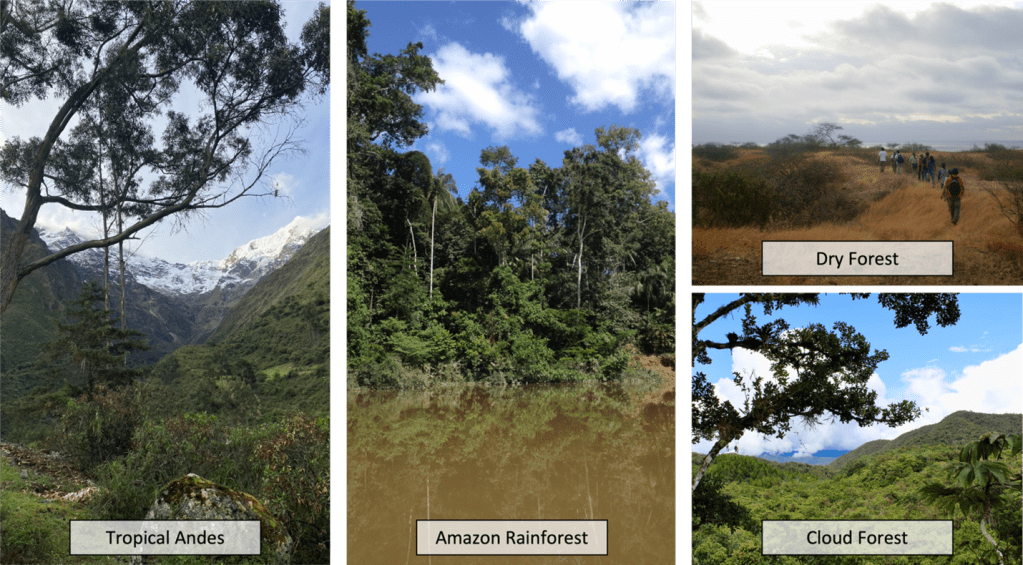
Photos by Rocío López de la Lama.
By Rocío López de la Lama, Nathan Bennett, Janette Bulkan, Santiago de la Puente, and Kai M.A. Chan.
Privately protected areas, or PPAs for short, a mechanism through which individual landowners can voluntarily protect their land, have been largely associated with wealthy or foreign individuals and even issues of land grabbing. Moreover, research on PPAs has focused on identifying and understanding people’s rational motivations for engaging in such an endeavor. In this paper we aim to present a different pictures for both, the type of landowner engaged in PPAs and the reasons that drive such engagement.
To achieve our aim, we took a deep dive into what really motivates landowners in Peru to voluntary dedicate their land to conservation. Peru is a biodiverse country that faces multiple challenges to achieve biodiversity conservation and sustainable development. Despite these challenges, there are landowners throughout the country creating and managing PPAs. To understand landowners’ stories and experiences with voluntary land conservation, we conducted personal interviews with 32 landowners. Landowners were largely local people, middle-income, with small-scale PPAs, with a strong sense of personal and ancestral connection to the land.
Our conversations were more than just interviews; they were stories from the heart about landowners’ personal and ancestral ties to their land. What emerged were not tales of financial gain or external pressure, but of meaningful relationships with and within nature that portrayed a profound sense of responsibility towards nature, their human and more-than-human communities, and future generations. These meaningful relationships are the true driving force behind their commitment to conservation, highlighting a deep, local connection to the land they love and protect.
These findings are not just relevant for Peru but could reshape how we approach and support voluntary land conservation efforts globally, especially in an era where engaging citizens and local communities in conservation is more crucial than ever. This research encourages a paradigm shift in understanding PPAs—not as individual actions needing incentives but as outcomes of long-term commitments to protect land and its embedded values. It underscores the importance of empowering citizens in global conservation efforts, ensuring the protection of biodiversity through genuine, value-driven stewardship.
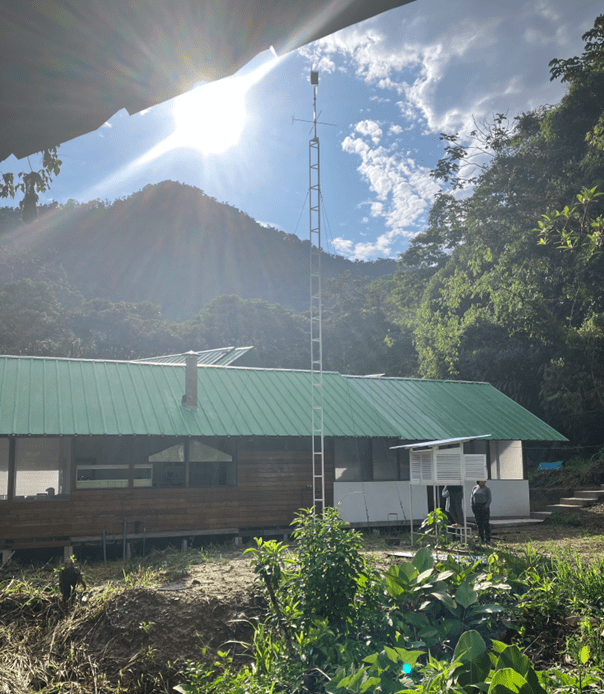
Photo by Rocío López de la Lama, 2023.
 Relational Thinking