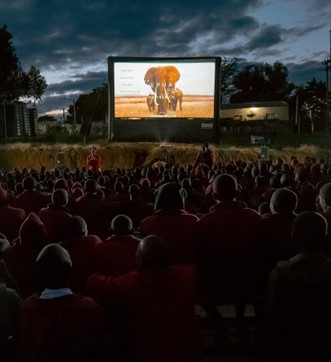
Credit: The Elephant Queen Outreach
By Williams, H.F., Leneuiyia, K.L, Mwalavu, B, Serem, G, Sempeyo, V., Pope, F., King, L.E & Verissimo, D.
“The Elephant Queen” (TEQ) is a natural history film that delves into the lives of elephants, portraying their journey for survival through times of drought. This film was taken to Kenyan schools and communities that have experienced human-elephant conflict, with the aim of fostering a more harmonious relationship between the two. In rural regions across Africa and Asia, such conflicts are common, with elephants competing with humans for resources, leading to crop destruction and threats to both human and livestock safety. Traditional methods of mitigating these conflicts often focus on separation and protection strategies, but few seek to shift human perceptions and foster empathy towards elephants. This study revolved around a mobile cinema that screened TEQ, offering rural communities a window into the true nature of elephants. Participants’ knowledge and sentiments regarding elephants were assessed through surveys conducted before and after the screening, coupled with interviews from key community figures. Our results indicate that students not only broadened their knowledge about elephants but also gained a more profound appreciation of the benefits associated with these animals alongside an enhanced sense of affection towards them. For adults, while educational gains were evident, the daily challenges of coexisting with elephants tempered their overall sentiment. Interestingly, a follow-up survey three months later revealed that many of the immediate positives of watching the film subsided although the study did find a delayed increase in adults’ affection for elephants, suggesting more nuanced impacts of the film. This study underscores the potential of nature films like TEQ in inspiring the youth and eliciting complex emotions in adults. While films alone can’t resolve all conflict, they can certainly open hearts to nature and underscore the ecological benefits these creatures provide. Beyond entertainment, films act as modern vessels for storytelling and facilitate dialogue, allowing for community voices to resonate in the larger conversation about conservation.
 Relational Thinking