By Moshe Gish, Masumi Hisano, and Masashi Soga.
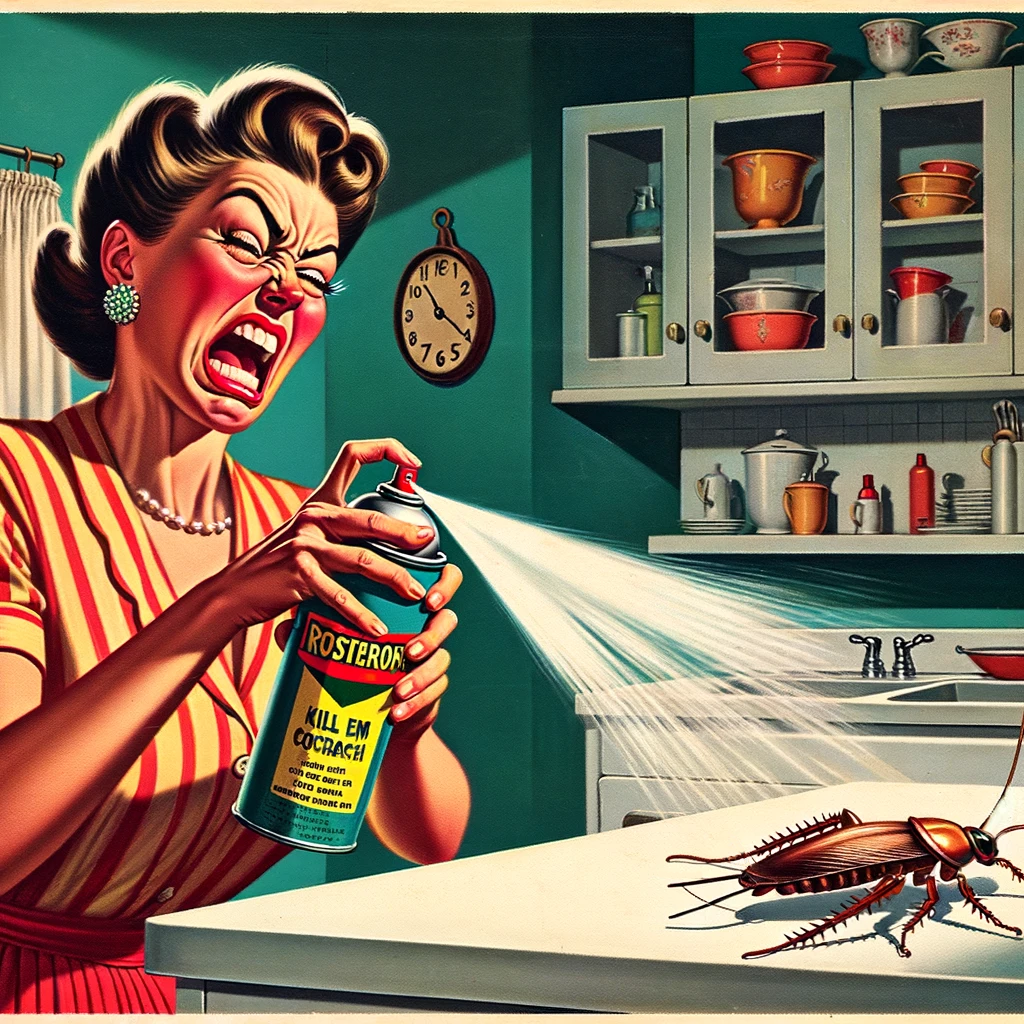
Insects are one of the world’s least favored living things. Although it might seem logical to assume that aversion to insects could influence how people use household insecticides, there is currently no empirical evidence to support this notion.
We, therefore, examined various factors that could potentially motivate people to use insecticides in their homes, focusing on the feeling of disgust, a central component of aversion toward insects, and a potential key driver of insecticide use. In an online survey of 2,500 participants, we asked people to rate their disgust toward insects and other invertebrates that are common in homes. The survey also asked about their patterns of insecticide use and their knowledge of indoor insects and control methods. We found that an increased awareness of the presence of insects in their homes moderately elevated the participants’ use of insecticides. However, we did not observe any other meaningful effects relating to factors such as ignorance of insects and control strategies or the desire to minimize chemical exposure. Contrary to our expectations, disgust had a negligible effect on insecticide use.
We believe that this result does not reflect a genuine disconnect between disgust and insecticide use, but rather suggests a limitation of traditional survey techniques in capturing nuances of the profound disgust most of the population harbors toward household insects. Due to most participants rating their level of disgust at six or seven on a seven-point scale, data variation was minimal, and consequently, we could not register critical information about the consequences of different levels of extreme disgust.
Current public health programs aimed at reducing excessive or unnecessary insecticide use typically focus on providing information with little consideration of the emotional aspects of human-insect interactions. Therefore, for future public health initiatives to be able to account for the emotional drivers behind insecticide use and to allow research in this field to move forward, novel methods for accurately measuring intense insect aversion must be developed.
 Relational Thinking