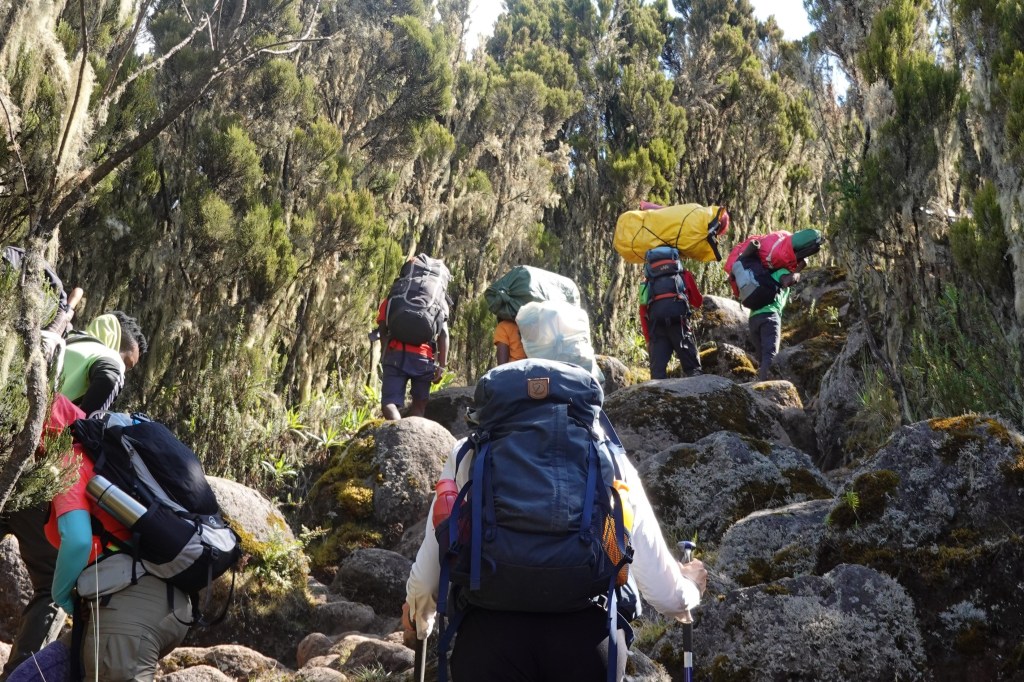
Photo credit: Berta Martín-López.
By Jasmine Pearson, Milena Gross, and Johanna Hofmann.
Nature-based tourism is a common outlet for people to escape from their everyday lives and enjoy the benefits that nature has to offer. Yet the majority of studies on the benefits of nature have measured benefits through quantitative and economic methods, often reducing nature to a monetary value. But what about the benefits of nature for which numerical terms cannot account?
To answer this question, we interviewed former tourists who have hiked Mount Kilimanjaro, Tanzania, to understand the benefits they gained from nature during (and after) their journey. We asked participants to share any photos they took of nature during their hike (photo-elicitation) to help them remember and to provide a visual understanding of the experience for the researchers. We found that tourists expressed a variety of non-material benefits of nature including aesthetic, learning, social, spiritual, and therapeutic benefits. Through storytelling and photos, participants painted a detailed picture of their memorable experience hiking through the unique diversity of plants and ecosystems that Mount Kilimanjaro has to offer. While most tourists were simply left in ‘awe’ of the beauty of the mountain, others shared how the experience changed their outlook on life.
Our results are important for nature-based tourism destinations like Mount Kilimanjaro as they provide insight into what tourists appreciate about nature and what keeps them coming back. In a broader sense, we believe that non-material benefits of nature can also help to achieve conservation goals by encouraging caring for, learning about and connectedness with nature. Policymakers, practitioners, and decision-makers alike should promote the different perspectives on nature’s benefits – especially those who live and work on the mountain – to maintain sustainable human-nature relationships at Mount Kilimanjaro.
 Relational Thinking