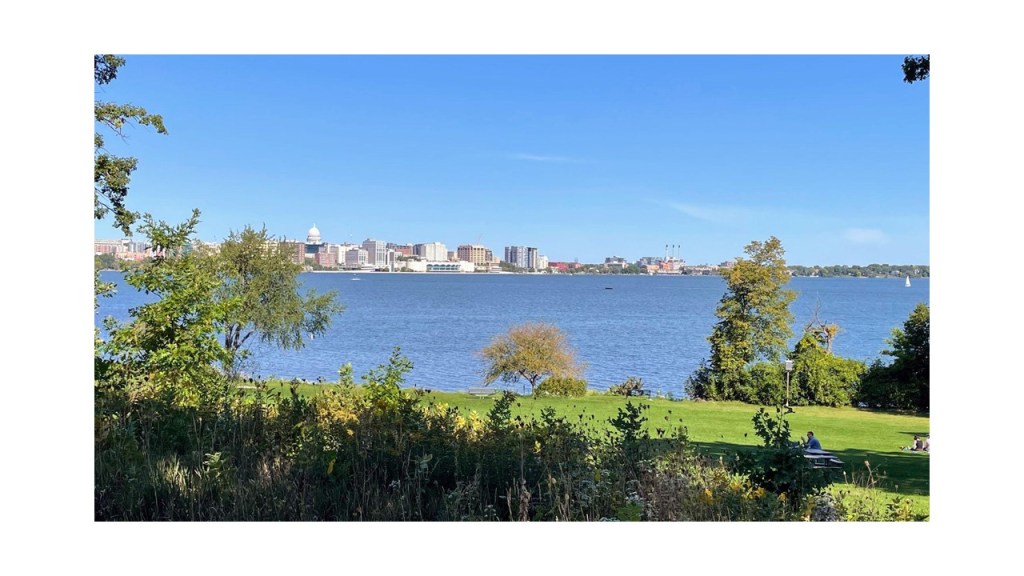
Photo credit: Sheryl Hayes Hursh
By Sheryl Hayes Hursh, Elizabeth E. Perry, and David Drake.
Human-nature connection (HNC) is a relationship between people and nature that many describe as an emotional bond developing from the specific interactions that we experience throughout our lives. This characterization can make researching HNC complicated, but also offers opportunities to explore the many pathways that may enhance lifelong HNC. For example, as urban populations increase, there is a growing recognition of the potential for urban green space to cultivate HNC and thus shape how urban residents feel about nature.
We investigated HNC via an online survey of 560 park visitors to three community parks (managed primarily to provide physical, social, and cultural recreation opportunities) and three conservation parks (managed primarily to protect native plants and wildlife) in Madison, Wisconsin, USA. We evaluated how each of the following explained the HNC of park visitors: (1) literacy and sentiment about six common urban wildlife species, (2) park experience (main reason for visiting, duration of visit, and frequency of visits), (3) number and frequency of nine childhood and adult recreation experiences (including bird watching, camping, fishing, and hiking), and (4) demographics (age, educational level, and gender). Across park visitors, increasing the number and frequency of childhood and adult recreation experiences was significantly associated with HNC, and this positive association continued for multiple recreation activities. Furthermore, correctly identifying species and having positive feelings about them, along with visiting a park to experience nature (versus visiting for reasons such as sports or picnicking), and frequent and longer visits were also significantly associated with HNC.
Our research demonstrates the importance of lifelong nature-based recreation experiences in developing and enhancing HNC. We strongly encourage communities to allocate the necessary resources to increase opportunities for participation in nature-based recreation for people of all ages and abilities as this is not only important to human health and well-being but may be key to advancing pro-environmental engagement and securing global environmental sustainability.
 Relational Thinking