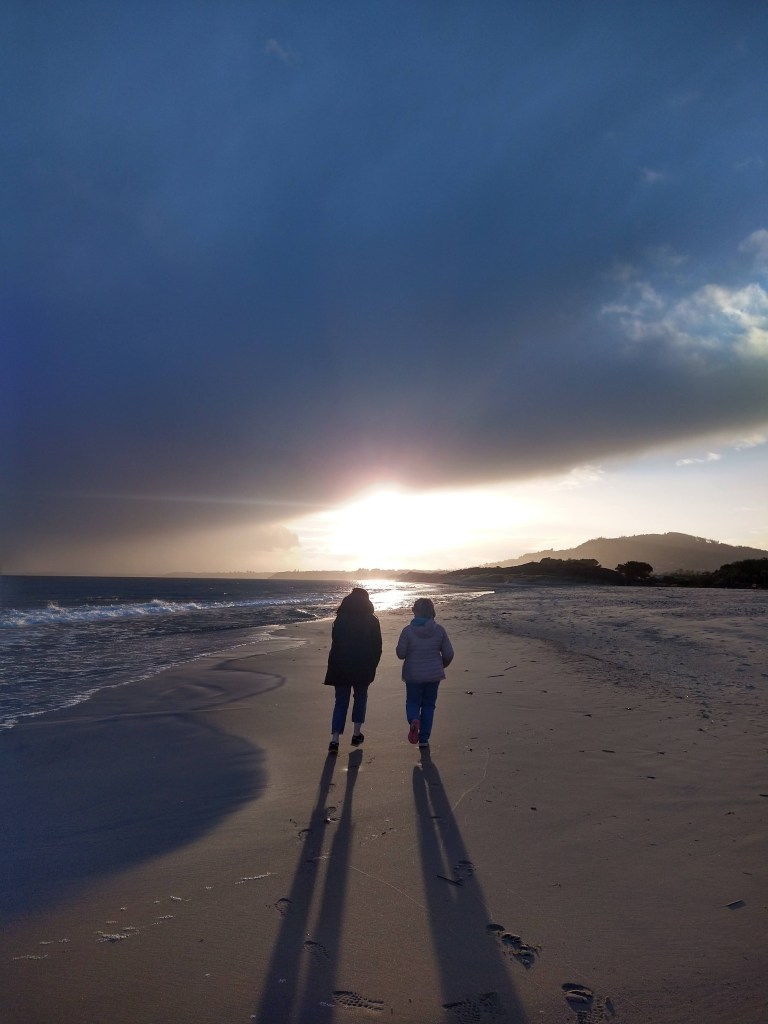
Credit: Tomas Buitendijk. Photo reproduced with permission of people displayed.
By Tomas Buitendijk, Elisabeth S. Morris-Webb, Jeneen Hadj-Hammou, Stuart R. Jenkins, and Tasman P. Crowe.
Coastal landscapes around the world are changing rapidly. Climate change is leading to more storms and erosion that are increasingly affecting the landscape. Communities are installing seawalls, rock armour and other structures to help protect the coastline and the people who live there. We wanted to understand what coastal places mean to people, so we can help protect their relationship with the landscape even as it continues to change. For this reason, we worked with residents of south County Wicklow, Ireland to learn which places on the coast they visit most frequently and why.
We interviewed local people, asking them about their most frequently visited place, what they did during visits and how this made them feel. We asked the same questions in a written questionnaire, along with closed questions about how attached people felt to the place. We also asked about people about their age, gender, and other demographic information.
We found that age and gender did not influence people’s relationship with coastal places, and there was no overall preference for natural over constructed places. Instead, people were concerned with the meaning of a place. For example, people felt that a coastal place that was nice to visit because it was peaceful and quiet should stay that way. People expressed different kinds of attachment to places depending on how we asked the questions. The best way to understand what coastal places meant to people was to create an image of all the different answers together. We called this visualisation “affective engagement,” to explain how the meaning associated with a coastal place is informed by people’s interactions with it.
Understanding “affective engagement” can help decision-makers plan for a better future for both people and places, by taking account of important connections between coastal communities and the landscape.
 Relational Thinking