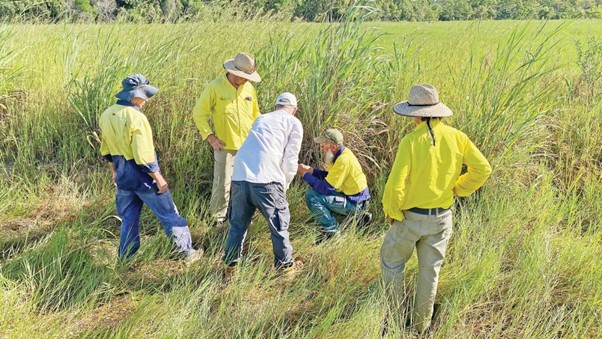
Photo credit: NRM regions Queensland website.
By Nisansala Abeysinghe, Christopher O’Bryan, Angela Guerrero, Jonathan Rhodes, and Eve McDonald-Madden.
Invasive species – animals and plants not native to a region – cause significant damage to global biodiversity and the global economy. Invasive species are hard to manage, mainly because they spread across landscapes that different public and private organisations manage. Therefore, collaboration among these parties is crucial for tackling invasive species impacts. Yet we know surprisingly little about what drives success in collaborative invasive species management projects. This is problematic considering decision-makers need to decide how and with whom they should collaborate to maximise the benefits of their management.
In our paper, we examine the factors influencing the collaborative process and their association with different expected outcomes in invasive species management. The outcomes on which we focus are achieving goals, ensuring durable outcomes, and the extent stakeholders support or oppose the collaboration. To achieve these outcomes, we test a conceptual model using survey data to describe and quantify the perceptions of professionals in invasive species management in Queensland, Australia.
We find that having a good collaboration process that includes factors such as good leadership, trust, and communication among team members enhances the performance of invasive species management. We also find that the way collaborative projects are structured, such as having shared goals and allowing members to participate in decision-making, is also important for project performance, particularly in achieving the project goals. Further, the extent to which stakeholders support or oppose the collaboration directly influences the ability to achieve long-term outcomes.
Our quantitative evidence suggests that decision-makers should give equal importance to designing favourable collaborative project structures and fostering collaborations with different parties. Paying attention to both aspects enhances the benefits of collaboration in invasive species management.
 Relational Thinking