By Benjamin Ghasemi, Gerard Kyle, Jane Sell, and Gary Varner.
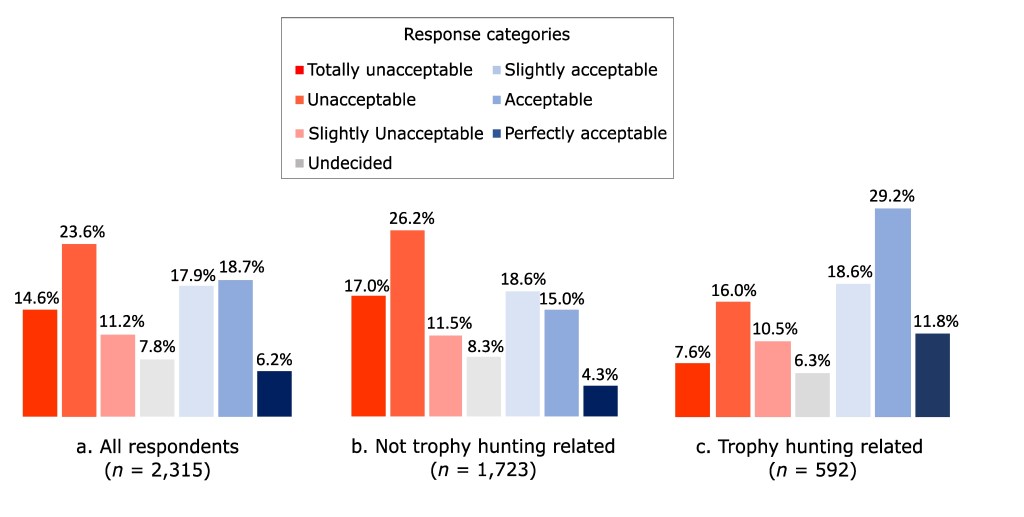
Trophy hunting, the practice of hunting large charismatic nonhuman animals for recreational purposes, where their body parts are taken as a representation of success or memorial, is a controversial topic in wildlife conservation. A big part of the controversy is about its morality. To understand what experts think about trophy hunting, we asked the opinion of over 2,300 scholars who have written about biodiversity conservation.
These experts had different ideas about whether trophy hunting is morally acceptable for conservation. The most important factor that influenced their opinions was how trophy hunting affected the local people living near the animals. Other things that played a role were what experts thought about the consequences for the ecosystems and wildlife populations, whether they made decisions based on utilitarian ethics, and how they felt about the welfare of the animals.
The study shows that conservation scholars from different fields, like ethics and social sciences, need to work together to think about the role of animal rights and welfare in conservation. We also need to get a solid understanding of how trophy hunting affects local communities. If experts have different opinions on trophy hunting, and these views contribute to a divide and distrust between them, it could negatively impact wildlife conservation. In this paper, we suggest ideas from the research and other studies to help bridge the gap between different opinions and develop better ways to manage trophy hunting.
 Relational Thinking