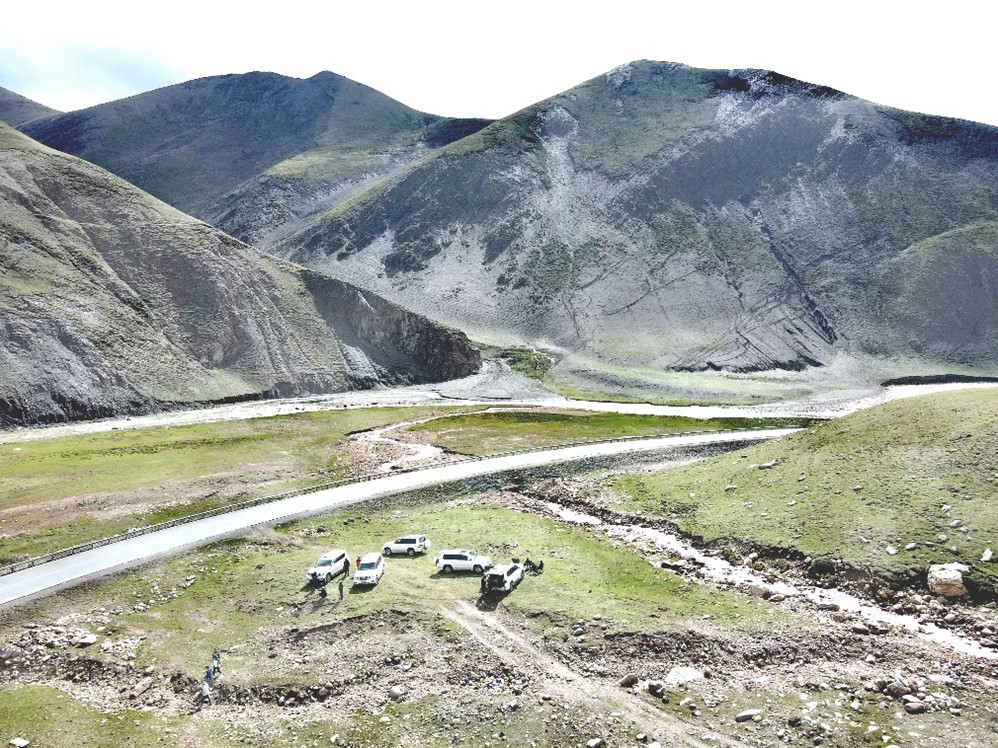
Photo Credit: Hanchu Liu
By Jie Fan, Hanchu Liu, Zhongrui Sun, Jiawei Yi, Baoyin Liu, Dong Chen, Rui Guo, Zhe Sun, and Hao Zhao.
Many less developed countries and regions have rich natural landscape resources, and the scale of nature-based tourism is growing rapidly. This tourism has become a new driving force of local social-ecological systems change. In fact, the growth of nature-based tourism in the short term has a significant driving effect on local economic growth, while the negative impact on the local ecological environment is gradually increasing, which brings great challenges to the long-term sustainable development of local areas. Tibet is an ideal case study, for this phenomenon. As the ecological environment in Tibet is extremely fragile and the local economies are relatively poor, the impact of nature-based tourism on the change of the local ecosystem is more intense.
We used large-scale social media big data, combined with data on ecological vulnerability, landscape aesthetic value, residents’ livelihood, and traffic accessibility to study this issue. We found that up to 89.97% of the digital footprint grids are in the nature areas of Tibet, and tourist hotspots are expanding from a few dotted scenic spots to vast nature areas. 40.57% of the floating populations entering nature areas enter areas with high ecological fragility, posing significant ecological risks to the local area. The pursuit of tourism revenue by local governments and the construction of transportation infrastructure in ecologically fragile areas led by the central government have both contributed to the ecological risks that nature-based tourism brings.
Nature-based tourism in Tibet has the dual characteristics of driving local economic development and causing regional ecological risks. Balancing the relationship between the two is the key to formulating policies, with the goal of enhancing the sustainability of the social-ecological systems, maximizing tourism income, and minimizing ecological risks. These conclusions have implications for other less developed countries and regions with rich natural landscape resources in the world, and provide a reference path for promoting this type of area to achieve sustainable development goals.
 Relational Thinking