By Markus K. Zaplata.
In 2022, people built more renewable energy plants worldwide than in any previous year. The growth is mainly in solar energy and will continue in the coming years. This is positive. However, I do not see a breakthrough opportunity for positive change until terrestrial solar parks meet requirements for multiple levels of sustainability. In addition to generating renewable energy, other considerations include whether managers use plant seeds of local provenance for resowing in solar parks and whether they use the organic biomass that grows in the parks.
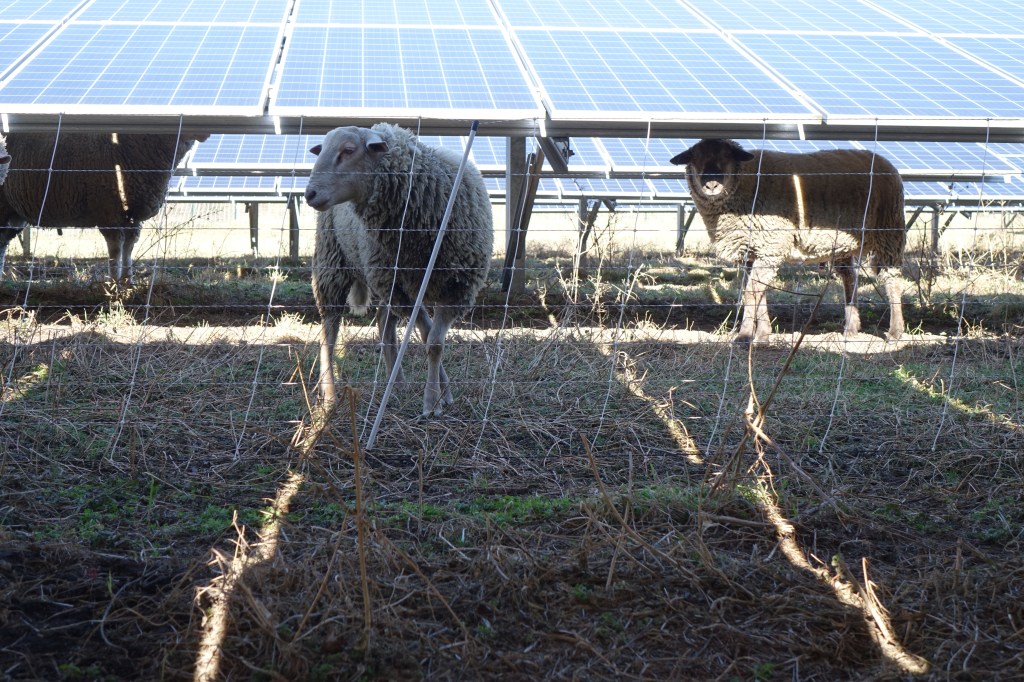
I focus particularly on grazing, which is possible if the solar panels are a minimum distance above the ground. The shade that solar panels provide is pleasant for livestock. If the fences are reinforced, solar parks can be predator-proof. Use of solar parks for grazing can thus bring several things together to achieve positive impacts on nature and society. In agriculture, some views are so entrenched and some lifestyles so divergent that perhaps only new contexts, such as solar parks, can bring everyone together on an integrative path.
In terms of implementation, current practices are diverse. Where solar parks have been established with consideration of aspects of biodiversity such as vegetation and insects, parks with integrated livestock farming will follow more easily. Positive practical examples will find imitators and spread. There is growing evidence from the scientific community that sustainability and land use are inseparably linked. Thus, there is no pure sustainability through the generation of sustainable energy alone. It must go together with other dimensions of sustainability, in the sense of the multi-functionality outlined in my perspective.
 Relational Thinking