By Virginia Thomas, and Alexandra Palmer.
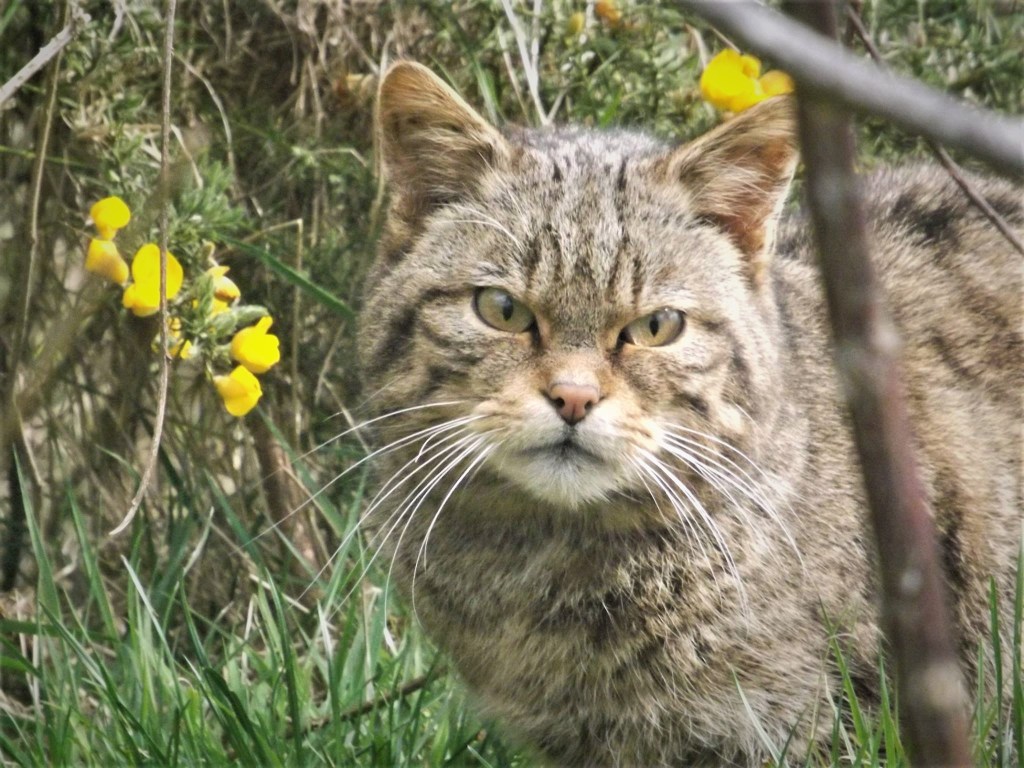
Could you tell the difference between a European wildcat (Felis silvestris), a tabby domestic cat (Felis catus), and a hybrid of the two at twenty paces? What about distinguishing a feral cat from a stray or domestic cat that has been caught in a live trap?
Drawing on qualitative research in Britain and Aotearoa (New Zealand) (NZ), we examine how people distinguish and categorize different species of cats. As well as exploring the practical issues with distinguishing between similar species of cats, we discuss how different stakeholders make decisions based on their values. In particular, we explore whether their priority is protecting the cat itself, or rather the cat’s potential prey (such as a native or game birds). In NZ, while some conservationists treat any cat in a conservation reserve as if it is feral, cat advocates tend to have a much stricter definition of ‘feral’ and prefer to assume that cats are stray or companions in ambiguous cases. Meanwhile, in the UK it is the conservationists that err on the side of protection in ambiguous cases, the goal being to protect any cat that may potentially have wildcat genes. Other stakeholders such as gamekeepers may be less cautious.
Such differences are important as they can mean that laws aiming to protect only specific types of cats may not be implemented as intended. Furthermore, our research demonstrates that values affect not only people’s views about certain categories of animals (e.g., feral cats), but also how they define these categories in the first place. A ‘feral’ cat is, to some extent, in the eye of the beholder.
 Relational Thinking