sensitivity of the topic.
Photo Credit: Harriet Ibbett
By Harriet Ibbett, Julia P. G. Jones, Leejiah Dorward, Edward Kohi, Asri Dwiyahreni, Karlina Prayitno, Stephen Sankeni, Andie Wijaya Saputra, Jesca Mchomvu, Joseph Kaduma, Humairah Sabiladiyni, Jatna Supriatna, and Freya St. John.
Read the full paper here.
Asking people about their behaviour can help design better conservation interventions and is becoming increasingly common. However, obtaining reliable information can be challenging, particularly when asking people about things they might consider sensitive, like whether they have broken the law. Topic sensitivity can raise methodological, ethical, political, and legal concerns which, if poorly addressed, can have significant impacts on research participants, the research process, and data quality, as well as the success of conservation outcomes that are informed by research findings. While considerable effort has been invested in developing techniques for reducing bias when collecting data on sensitive topics, less attention has been focused on identifying if, and why, a topic is sensitive.
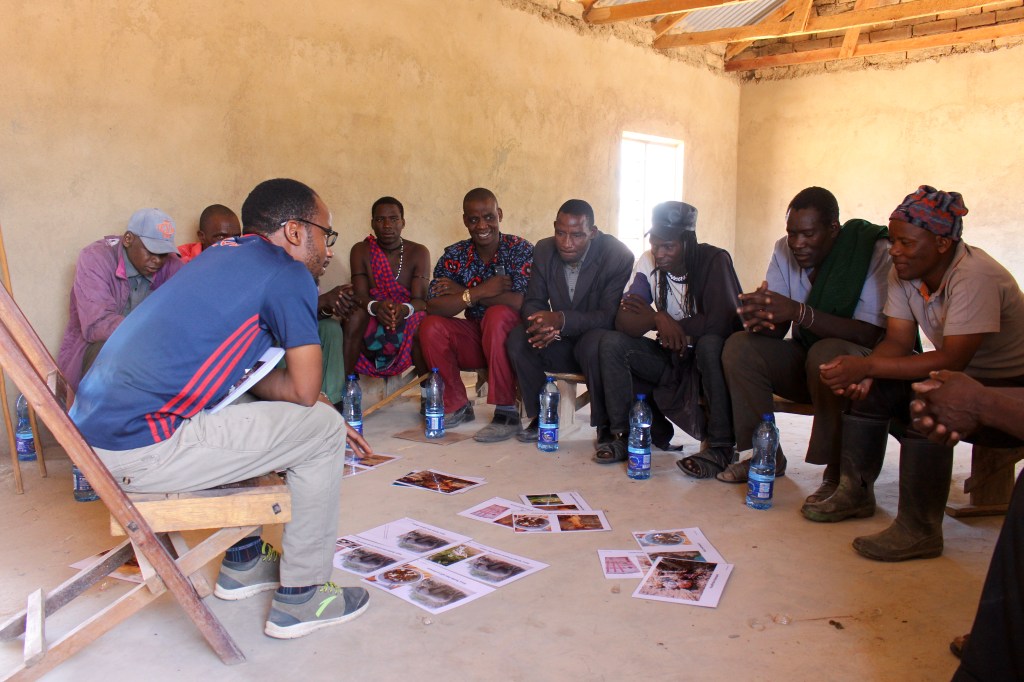
Here, we present a mixed methods approach to measure topic sensitivity. We develop a new tool, the Sensitivity Index, which consists of five questions which identify whether people will likely find a research topic sensitive. We also develop group exercises which can be used to gain a deeper understanding of peoples’ willingness to discuss different topics. We test these methods with people living near protected areas in Indonesia (n=362) and Tanzania (n=345), and find participants’ knowledge of rules, and their experiences of living alongside protected areas affected how sensitive they considered topics to be.
We highlight that mixed methods approaches can provide holistic and nuanced understanding of topic sensitivity. However, recognising that such in-depth studies are not always feasible to conduct, we outline how tools, such as our Sensitivity Index, can easily be adapted and deployed to gain insights into topic sensitivity. Doing so can better inform conservation research and practice.
 Relational Thinking