By Samuel Turvey, Živa Alif, Jennifer Crees, Rachel White, Megan Quinlan, Rosalind Kennerley, and Thomas Dando.
Read the full paper here.
Landscapes that have suffered historical biodiversity loss are often inhabited by people today. Any decisions about whether to restore lost species must therefore take human perspectives into account – as local stakeholders can both impact and be impacted by conservation interventions, and local support is a key factor influencing success in species reintroductions. What are the attitudes, awareness and concerns of stakeholders who might be directly affected by biodiversity restoration, and are such activities appropriate or not in light of this human dimension?
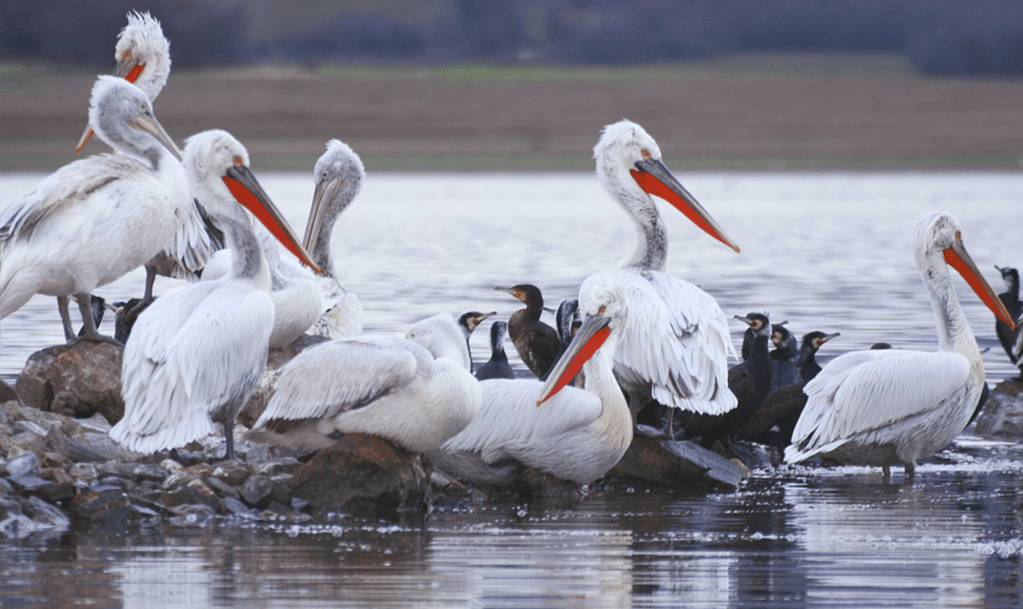
In this study, we explore the opinions of local communities living in Britain’s two largest wetland systems, the Somerset Levels and East Anglian Fens, toward the possible future reintroduction of Dalmatian pelicans (Pelecanus crispus), which died out in Britain over a thousand years ago.
Pelicans are distinctive birds with potential to increase support for wetland conservation, but they might also provoke conflict through real or perceived competition with anglers, and it is likely that wider wetland restoration would be necessary to provide suitable nesting and feeding habitats. Our online survey of 590 respondents was preferentially completed by local residents who were more engaged with nature-related activities such as birdwatching, but it provides an important baseline for understanding variation in local attitudes toward pelicans and other biodiversity, and how different stakeholders might respond to future coexistence with pelicans and associated landscape management.
Both benefits and concerns were identified in relation to possible pelican reintroduction. Whereas anglers held more negative attitudes and raised more concerns, they were not more likely to be unsupportive, and may thus support future pelican reintroduction if concerns around impacts to fish stocks are addressed. In contrast to local attitudes toward reintroduction, more factors were associated with negative attitudes toward potential wetland restoration required to establish pelican habitat, suggesting that positive feelings toward biodiversity are outweighed by concerns around potential exclusion from local landscapes.
Our study suggests that community engagement to build trust and support for species-specific and landscape-scale conservation requires separate approaches, and highlights the need to ensure that societal perceptions of potential conflicts and potential management solutions are embedded within project planning.
 Relational Thinking