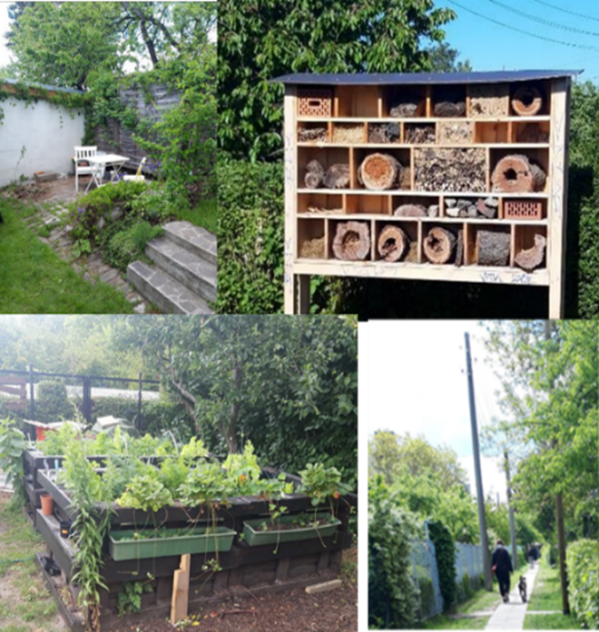
Photographer: Dara Gaeva, 2018
By Dagmar Haase and Dara Gaeva.
This Plain Language Summary is published ahead of the article discussed; please check back for a link to the full paper.
Gardens in cities have been the focus of a wider public health debate in Europe’s polluted and dense cities, for the elderly and considering the COVID-19 pandemic. Many cities report rising demand for allotment gardens by people from all age groups including the most vulnerable: elderly and families with young children.
This study aims at examining the bundle of ecosystem services provided by allotment gardens in the city of Berlin in Germany. It assesses the values related to those ecosystem services benefits for both gardeners and the wider urban public. It compares perceptions of the social-environmental values of allotment gardens perceived by gardeners and people living in the gardens’ neighbourhood.
We carried out a web-based survey, additionally a part of the questionnaires was handed out in paper form for respondents who did not have internet access. The resulting sample of 550 gardeners shows that urban allotment gardens play an important role in food production, biodiversity conservation, but also social-environmental interactions. The variety of environmental management practices, such as installation of artificial nests for insects, sowing of special flower mixtures, leaving areas with wild vegetation, use of organic fertilizers, including crop residues, shows that most respondents among gardeners are aware of the methods aimed at maintaining biodiversity and soil fertility in their allotment.
All respondents explicitly stated that also people living in the neighbourhood share these benefits provided by garden ecosystems.
 Relational Thinking