By Alice Ouvrier, Manon Culos, Sylvie Guillerme, Antoine Doré, Helene Figari, John D. C. Linnell, Pierre-Yves Quenette, and Ruppert Vimal.
The return of large carnivores like brown bears in Europe creates new challenges for sharing landscapes with humans. While technical solutions are often discussed, it’s clear that social factors play a crucial role in how we coexist with wildlife. Geographers are now looking at how humans and animals interact in specific places, recognizing that both shape their environment together.
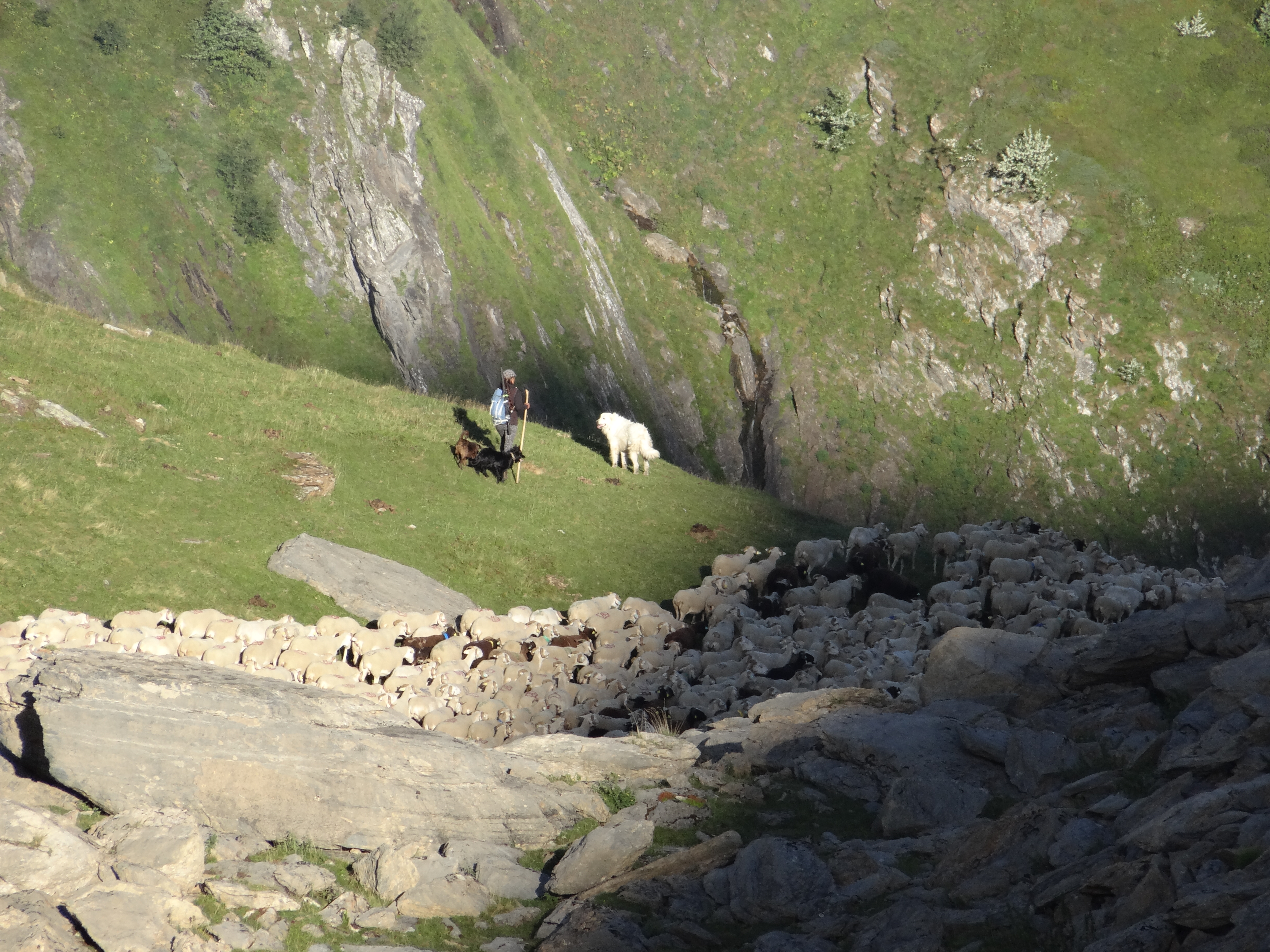
In this study, we explore how the recovery of brown bears in the French Pyrenees has affected relationships with pastoralists (sheep farmers and shepherds). Using a detailed and multi-faceted approach, we analyzed these interactions on three different mountain pastures since the bears returned in the late 1990s. Our methods included interviews, observations, and data on bear attacks and genetics, combined with information on pastoral practices.
We found that the return of the bears involved three unique coexistence trajectories. Each pasture became a distinct landscape shaped by the behaviors and histories of both bears and pastoralists, such as their movements, bear attacks, pastoralist decisions, and the specific features of the environment.
Our findings suggest that coexistence between humans and wildlife isn’t a one-size-fits-all situation. Instead, it’s made up of many different patches where unique stories of interaction unfold. To foster coexistence, conservation policies need to recognize and support this diversity, allowing for local, place-based solutions that take into account the intricate relationships between people and wildlife.
 Relational Thinking